
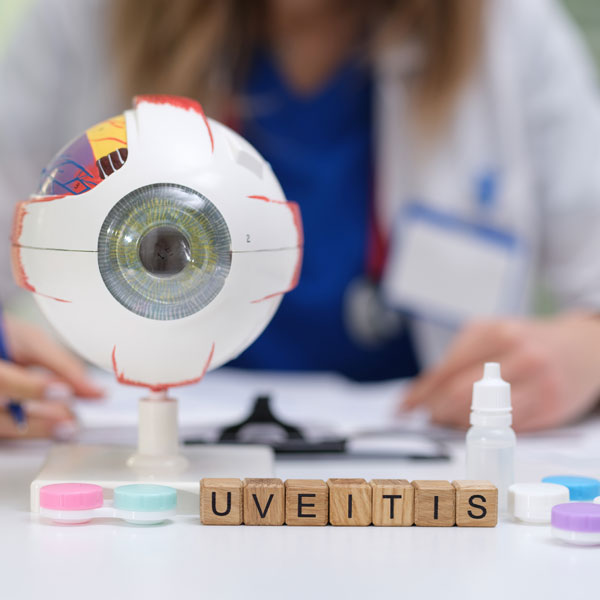
1. Non-infectious & infectious uveitis
What it is:
Inflammation of the uveal tract (iris, ciliary body, choroid). It may be infectious or non-infectious (autoimmune).
Symptoms:
Pain, redness, blurred vision, light sensitivity, floaters.
Treatment:
Anti-inflammatory drugs (corticosteroids), immunosuppressants or antimicrobial therapy depending on the cause.
2. Uveitic macular edema
What it is:
Macular swelling caused by uveitis, affecting central vision.
Symptoms:
Blurred or distorted central vision, difficulty reading.
Treatment:
Corticosteroids, intravitreal injections or immunotherapy.
3. Retinal vasculitis
What it is:
Inflammation of retinal blood vessels, often associated with systemic diseases.
Symptoms:
Vision loss, floaters, dark spots in vision.
Treatment:
Anti-inflammatory and immunosuppressive therapy, plus management of the underlying disease.
4. Ocular sarcoidosis
What it is:
An inflammatory disease that can affect the eyes, often presenting as uveitis.
Symptoms:
Blurred vision, redness, pain, light sensitivity.
Treatment:
Corticosteroids and immunosuppressive therapy.
5. Pediatric uveitis
What it is:
Uveitis occurring in children, often chronic and sometimes asymptomatic.
Symptoms:
May be silent; possible vision reduction or strabismus.
Treatment:
Long-term monitoring and anti-inflammatory or immunosuppressive therapy.
6. Acute retinal necrosis and complications
What it is:
A rare but severe viral infection of the retina leading to tissue necrosis.
Symptoms:
Pain, redness, rapid vision loss, floaters.
Treatment:
Urgent antiviral therapy and possible surgery for complications (e.g. retinal detachment).